Wednesday, December 18, 2013

Peeling, Exfoliating, Ornamental Bark for Winter Landscape Interest


Paperbark Maple Bark

Tree leaves are down and most deciduous branches are bare. And though Crabapple LandscapExperts can enhance the winter landscape of the properties you manage with winter-flowering Camellia, Witch Hazel, Oregon Grape Mahonia, Japanese Paperbush, and Hellebore as well as cool-season winter color plants, there is another ornamental feature that takes center stage in the landscape now.

Peeling bark, known as exfoliating bark (as in skin care) is the natural process of old bark peeling away from a tree trunk in large curls or patches, revealing the new bark that is often of a different color beneath. Certain trees are known for this shedding of bark and used ornamentally in the landscape.  

Cork Oak Bark by P Tobin
Exfoliating bark adds visual interest and captures attention during the winter season. Some of the trees selected for this attractive feature include: 
  • Paperbark Maple (Acer griseum), 
  • 3-Flowered Maple (Acer triflorum
  • River Birch (Betula nigra
  • Lacebark Pine (Pinus bungeana)  
  • Lacebark Elm (Ulmus parvifolia) 
  • American Sycamore (Platanus occidentalis) large tree
  • Climbing Hydrangea (Hydrangea anomala ssp. Petiolaris) woody vine 

Crapemyrtle Bark by UAR
Besides beauty, exfoliating bark eliminates fungus diseases, boring insects and pollution from an ornamental tree by simply dropping off, all ecological advantages for the tree. Crabapple LandscapExperts often chooses these trees for the urban landscape, since they can refresh and renew their bark despite ozone and urban particulate matter. Call your Crabapple Rep now to discuss adding woody plants with attractive bark to your landscape during the winter planting season at 770-740-9739. 


Eucalyptus deglupta


Digging Deeper
Rainbow Eucalyptus (Eucalyptus degluptais a tropical tree with incredible exfoliating bark! --> 

Wednesday, December 11, 2013

Think Outside the Box to Choose a Living Christmas Tree

Choose a Living Christmas Tree; Think Outside the Box!

Blue Spruce likely will not thrive
in Hotlanta
Purchasing a freshly cut Christmas tree, wreaths and greenery each year is not a profligate waste of resources, but specifically helps Christmas Tree Growers and the Agricultural industry in general. Just think of cut trees as longer-term "cabbages" specifically planted by tree farmers to be harvested in seven years or so. After the holidays put discarded trees to good use as habitat for wildlife, or chipped, shredded and turned into compost, thus recycling their nutrients and minerals and enriching the earth. It’s all good.  

On the other hand, the popularity of choosing a live Christmas tree growing in soil in a nursery pot has been on the rise. The problem is that many of these trees don’t survive the holiday season or don’t fit the Atlanta climate or the landscape plan if they do survive. Crabapple LandscapEXPERTS suggest you choose a tree appropriate for the climate, care for it correctly while it is decorated, and afterward, use it to good advantage and site it correctly when planting in the landscape.  

When shopping for the tree, consider its mature height and width and plan ahead to decide where it will be planted in the landscape. Savvy gardeners and landscapers dig the hole before they ever go shopping for a tree.

Vigorous rootball
When selecting a prospective tree, choose only healthy stock and not stressed leftovers from last season. Consider good color, good branching structure and flexible limbs. Knock the plant out of the container and look for non-pot bound, non-circling root systems with fresh white feeder roots.  The potting mix should be moist, and there should be no disease or insect damage evident.

Choose only from varieties that grow well in the area. While fir, spruce and pine are traditionally used for cut trees, they are not suited to live in metro-Atlanta. Garden Centers often market a wide variety of cone-shaped trees as holiday options, whether or not they do well long-term, so choose the one that’s best for the area and the specific landscape, even though it may not be a traditional choice. 

Deciduous
Now is the time to be thinking “outside the box”. What about choosing a dogwood, redbud, flowering cherry, deciduous magnolia or double file viburnum to decorate? Ornaments would look terrific hanging from bare branches, and one of those might be just the accent plant the landscape needs. 

Cone Rosemary
What about a cone-shaped rosemary or bay tree? Even a balled & burlapped selection is ok; merely place in a large landscape pot with drain holes and cover with mulch to keep evenly moist. 

Tropicals can be decorated!
Don’t fail to include the Tropicals section when searching for a living Christmas tree. The Norfolk Island Pine is “nearly traditional,” and one year I didn’t even shop but decorated our oversize Monstera deliciosa with a choice selection of my Mom’s vintage ornaments. It’s the season!

If a hardy tree is selected, don’t bring it inside right away, but keep it outside in a protected area until a few days before Christmas. Keep the soil moist but not wet and sheltered from winds and full sun. Acclimate the tree to warmer temperatures by moving it onto a covered porch or garage over a period of three to four days.

For needle-leaf or broad-leaf evergreens, decrease transpiration from the leaf surfaces and retain valuable moisture within the tree by spraying with an anti-desiccant/anti-wilt product.  A couple of brand names are Wilt Pruf or Cloud Cover.

Crabapple Warning: a living tree that soon will be returned to winter temperatures outside cannot be brought indoors for weeks on end without consequences. Warm rooms with low humidity can quickly dry out the tree. Dormant buds can break and grow in a “false spring,” only to suffer when moved back outside. Avoid bringing the tree indoors too early, since the less time spent in hot, dry indoor temperatures the better, and certainly no more than a week. Avoid placing near heat vents, forced air, radiators, stoves, but do consider a window where it will get some sunlight. Keep soil in the pot moist.


After Christmas move the tree back outdoors to that protected area so it can readjust for a week or so. When there’s a break in the weather, follow recommended planting procedures, with a wide, shallow planting holeabout twice as wide as the root ball, but not deeper.  Plant slightly higher than the surrounding soil because it will soon settle, backfill with the native soil and mulch the tree to retain moisture. Newly planted trees need even moisture, so water throughout winter and spring. The new addition will contribute holiday memories as it adds beauty to the landscape.  

Wednesday, December 4, 2013

Nature Indicates Best Planting Time for Bulbs is NOW!


Colorful tulips make a big impact on the landscapes you manage when they flower in the spring. 

Crabapple can add brilliant tulips to your Seasonal Color Beds by planting Spring-flowering bulbs now. Crabapple LandscapEXPERTS Floriculture Manager Chessa Azzolesi says, “We do not install tulip bulbs at the same time we install the fall pansies and cool season annuals. The ground is not yet cold enough, and the days are not short enough then. We install our tulip bulbs in December, usually one to two weeks before the Holidays.”

Some of Nature's “Guidelines” that signal when to plant bulbs 
  • Night temperatures average 40-50 degrees F. 
  • Soil temperatures hit 50-60 degrees F.
  • The UGA / Georgia Tech game has been played
  • Persimmons are ripe on the trees
  • Chickweed begins to appear in the flower beds 
  • Camellia sasanquas are in bloom
  • Tender houseplants are back indoors
  • Cicadas and crickets stop chirping 
  • Gloves are needed when walking the dog 
  • Fall foliage is past its peak and heaps of autumn leaves are on the ground
  • There's a run on fruitcakes at the grocery
  • Christmas wrapping paper goes on sale
  • Christmas Cactus is in bud
  • Crabapple winterizes your irrigation system 
  • Migrating birds fill the skies 
  • Peony foliage is brown and Hosta leaves are on the ground 
  • Car heater is often turned on 
  • Chipmunks and squirrels are actively burying pecans and acorns

Time is short! Call your Crabapple Rep this week at 770-940-9739 to get some Tulip bulbs added to your corporate landscape. 

Digging Deeper


To hear a quick Radio Spot on City CafĂ©’ with John Lemley on planting fall bulbs with Geri Laufer, click the link:  http://wabe.org/post/city-cafe-fall-ones-fancy-turns-todaffodils-and-tulips-0

Wednesday, November 27, 2013

Match your Football Team Colors to your Garden Berries!


This time of year people respond to color in the garden and on the football field! Berries add a bright statement to landscapes and many ripen and color up now. Some of these berries share the same Team Colors that are displayed by some of Crabapple LandscapEXPERTS' favorite SEC athletic teams.

Berried Treasures

The most familiar berried shrub in the winter garden is Holly, with a profusion of Georgia Bulldog-Red berries set against spiny evergreen leaves. There are many different types of holly including the deciduous Winterberry Holly, American Holly, English Holly and plenty of hybrids. 
If you’re a Florida ‘Gator try the Orange Pyracantha berries. This is a low-growing evergreen groundcover or can be trained on a wall or espaliered to climb along a fence, loaded with orange berries.The beautiful woody ornamental produces an abundance of orange berries each fall and is an excellent source of landscape color fall through winter. 
Alabama Crimson Tide followers might try the Crimson-Red berries on the compact, evergreen Nandina. This is a prolific berry producer and delivers brilliant crimson foliage and generous sprays of crimson berries. They are extremely long-lasting, often continuing into the following summer. Versatile and durable, Nandina is effective massed as a border planting or as a specimen in the landscape. Birds that consume Nandina berries are known to become inebriated and subsequently fly into glass windows and doors. 

LSU Tiger fans might plant the superb shrub known as Beautyberry that sports Purple berries. Abundant clusters of the long-lasting purple berries are grouped along the branches, following small purplish-pink flowers in summer. Prune this deciduous shrub in late winter to early spring to promote branching and berry production. 

Kentucky supporters might choose the bright Blue berries of Mahonia that follow upright trusses of  fragrant yellow terminal flowers. The berries are sometimes called Oregon Grapes. Leathery, dark green leaves have spines that make a fine specimen plant or a barrier hedge. 


White Snowberries could suffice for the garden if your team has lots of “away games” since visiting teams often wear White jerseys. Hope your team has a Winning Season!  


Digging Deeper

Wednesday, November 20, 2013

Winter Watering -- Plants Need Water Throughout Winter


Now that metro-Atlanta has had a taste of cold weather, many folks are ready to roll up the hose and turn off the irrigation system. But conifers, broad-leaf evergreens, and recently planted ornamentals need additional water to be supplied to their disrupted root systems until their myriad feeder roots grow out into the native soils. Extra water is needed so the limited root systems can absorb enough moisture to supply limbs and leaves and to prevent die back.

If an inch of water per week is not supplied by rainfall, Crabapple LandscapExperts recommend slow watering applied directly to the root ball. A soaker hose or water breaker nozzle is a good choice for slow water delivery. Take particular care to water underneath the limbs of evergreens, specimens or hedges because the branches can act as a shield to divert rain water, leaving the ground drier than ever. For established plants with larger root systems, apply the water to a wider circumference to make sure all the roots are supplied. .

Atlanta's seesaw temperatures are confusing for people and plants alike! Trees, shrubs and perennials that were planted or transplanted this autumn are especially susceptible to drying out as temperatures range from below freezing to 68 degrees F. and from cold, drying winds to bright sunny days.

Evergreens transpire water out of their leaves all winter long. This makes it essential to replace lost moisture whenever temperatures rise above freezing.
  
  • Broad-leaf evergreens such as holly, anise, boxwood, pittosporum, magnolia, camellia and tea olive can rapidly dry out in winter as well as during the growing season. 
  • Needle-leaf evergreens like pine, juniper, arborvitae, cedar, yew and Japanese plum yew also need a water supply during the cold months. Conifer branches often prevent rain water from reaching the ground so that it is dry under the canopy even after a rain.
Two to three inches of a good organic mulch applied over the top of moistened soil will help to maintain moisture levels at a constant level. Keep an eye on your new transplants throughout the winter. Ask your Crabapple Rep if you have questions about wintertime water needs of your plants.


Tuesday, November 12, 2013

10 Top Tips Protect Plants from Cold Temperatures

This week in metro-Atlanta, Crabapple LanscapEXPERTS suggest you pay attention to the weather forecasts! In meteorologist lingo, “the Jet Stream is blasting south, bringing frigid air masses from polar regions” and this is called an “advective freeze". We know that windy cold with a sudden plunge in temperatures, sometimes prolonged over several days, makes plant protection difficult. Remember, healthy, hardy landscape plants on the properties you manage will be unaffected by this cold snap. 

How To Best Protect Landscape Plants

Tip 1.  Add mulch to protect newly planted roots. Apply organic mulch anytime to insulate shallow roots by reducing temperature fluctuations. Most woody ornamentals and perennials are root hardy, so use a layer of mulch to protect the crown and the root zone despite the fact that foliage may die back to ground level. Evergreens and newly transplanted plants especially benefit from a thick layer of mulch around their bases insulating the soil and allowing them to take up moisture despite periods of cold weather and avoid dehydration. Don't let "mulch volcanoes" touch the trunks though. 

      Tip 2. Drape burlap, canvas, old quilts or sheets, large cardboard boxes, or floating row cover fabric over plants you might want to protect for the duration of the coldest temperatures. This might include prolonging the life of fall flowers or tropicals. Covering is used for three reasons:

a.      to slow wind movement;
b.      to protect from frost; and
c.      to shade from early morning sunshine- devastating to frozen leaves

NEVER use plastic to cover plants;  not clear plastic, not black plastic, and not white plastic. Plastic traps solar radiation and causes a buildup of moisture underneath. If plastic is not removed at dawn (and who is going to do that?) the sun’s rays cause heat build-up and frozen plant tissue bake inside the tent.

Tip 3. Use windbreaks like fences, walls, tree canopies or the sides of buildings to protect container plants that can’t come inside. Coverings include frost cloth, sheets and quilts, plastic, cardboard panels or large cardboard boxes, and lean-tos propped against the wall.  

Tip 4. Consider building a quick-frame (cold frame) to provide additional protection for favorite or newly transplanted ornamentals. Drive stakes into the ground around the plant(s) then drape canvas over the stakes, making sure it reaches to the ground. This provides air flow and ensures the cover does not have direct contact with the leaves, since touching can injure the foliage. 

Tip 5. Water the soil ahead of the freeze or when there is a slight break in the freezing temperatures to maintain soil moisture, but do not over water. Watering melts frozen soil or container potting mixes and lets plants become re-hydrated.

7    Tip 6. Home gardeners: DO NOT try to use water as cold protection! Commercial agricultural enterprises sometimes use water from a sprinkler system to coat strawberries or citrus fruits. The idea is to keep the leaf surface temperatures near 32°F (0°C) because sprinkling utilizes latent heat released when water changes from a liquid to a solid state. But sprinkling must begin as freezing temperatures are reached and continue until thawing is completed. Water must be evenly distributed and supplied in ample quantity to maintain a film of liquid water on the foliage surfaces, possibly for days.

Although commercial farms uses sprinkling for cold protection, residential sprinkler systems do not have the flow volume to protect plants this way. Too much water can cause disease, plus the sprinkler itself can freeze up. As a result, cold damage to plants from inadequate amounts of irrigation water may worse than if nothing was done at all.

     Tip 7. Move container plants to a shaded location to avoid morning sun hitting them. Lift pots and containers and place on lumber or 'pot feet' to prevent waterlogging. Insulate above-ground pots with a layer of bubble wrap or hessian to prevent them freezing and cracking and ensure plant rootballs stay healthy.  
     

     The Last 3 Tips are for those of us guilty of stretching the Climate Zone envelope. These plants shouldn't actually survive, but just maybe . . .
     
     Tip 8. Blankets do not provide “warmth” unless an incandescent light bulb or a string of Christmas lights is added inside the covering. Choose extension cords labeled for outdoor use. (New LED lights won’t add heat.) This is sometimes used as a temporary measure for a day or two.   
     
     
Tip 9. Happen to have a cool greenhouse handy? Lucky! Tender plants grown in pots can be moved inside during bad weather. Or take cuttings of those that cannot be grown in pots and overwinter these in a warm greenhouse or on a windowsill, ready for planting in spring.

Without a greenhouse, move hardy container plants under a protective roof like a deck or porch, and group them together to increase their protection. Move tropicals indoors overnight to avoid temperatures below 35 degrees F. then cart them outside again for the sunny days. 

  Tip 10. Cover is especially beneficial for borderline tender plants that the gardener just had to give a try. The ever-increasing number of tender plants available may not withstand sustained cold without some form of protection. Hardy Tropicals may fit this description. Recent transplants are good candidates for protection, because they may not had enough time to establish strong root systems. 

      Crabapple LandscapExperts know that well-cared for, hardy landscape plants will not need any protection at all! Call your Crabapple Rep with any questions at 770-740-9739! 


Wednesday, November 6, 2013

10 Top Landscape Uses for Ornamental Grasses

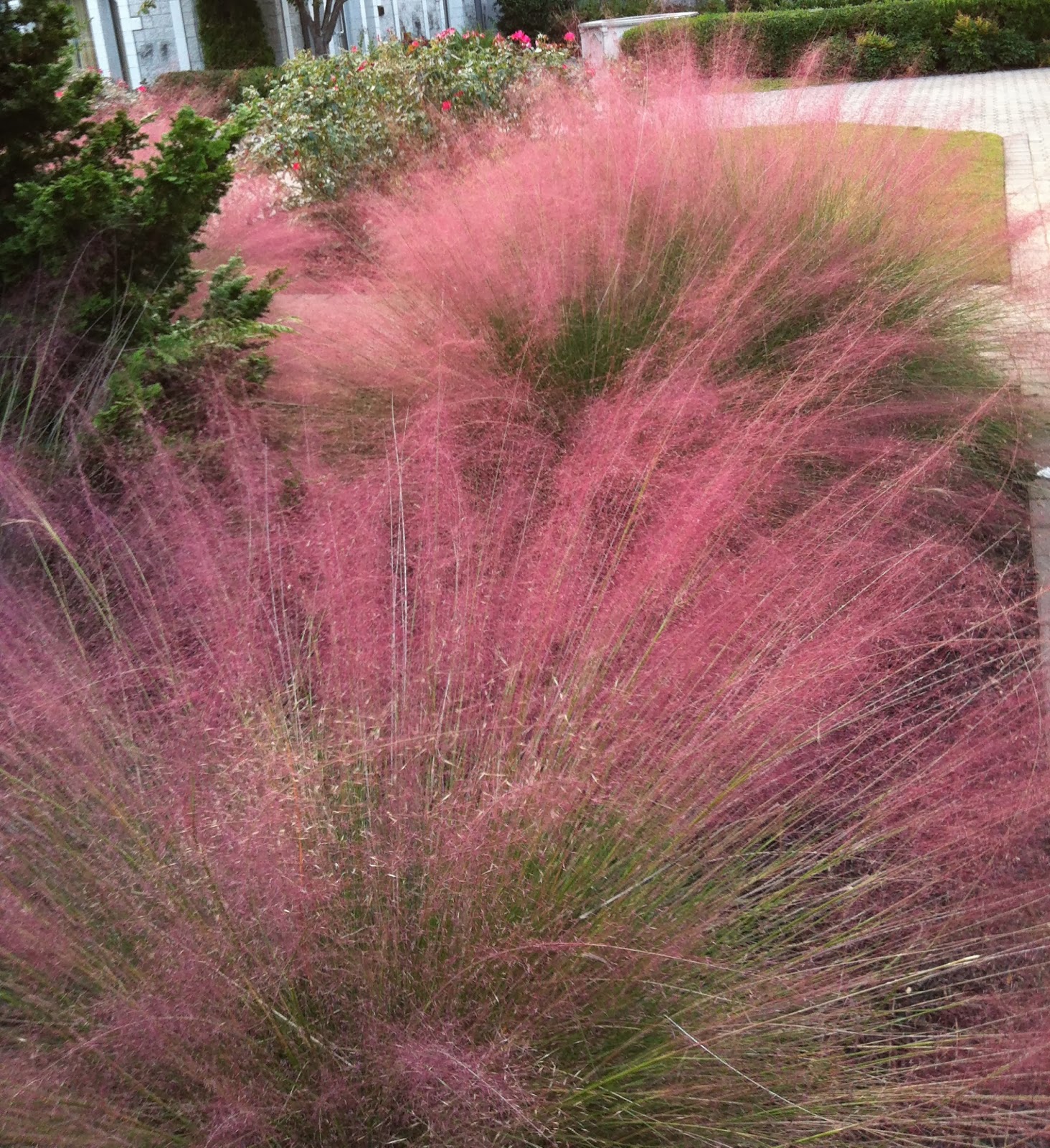
Muhly Grass


CrabappleLandscapExperts know there are many benefits of using ornamental grasses in landscape design. Grasses are low maintenance and they provide year-round interest; Grasses are fast growing and drought tolerant. They attract wildlife and gently move in the wind.

There are grasses for any type of landscape situation, from drought tolerance, shade resistance, or beautiful ornamental inflorescence. See a dictionary of grasses here


10 Top Landscape Uses for Ornamental Grasses include:

Garden accent- site a specimen plant in a perennial border and create a focal point
Add texture –light and filmy grasses contrast with large-leaf perennials and geometric clipped- shrubbery 
Soften hardscaping- mobile waving of grass and movement is in contrast to solid buildings dramatic effect of 
      mass planting
Dress up decks, pools and patios- formal repetition in containers or casual groupings
Edging- short tufty grasses like blue fescue, grassy substitutes like Liriope, sedge or carex
Make colorful containers - adds a vertical note 
Fall and winter interest- persistent grasses will bleach in sun
Attract wild life - those that eat grass seeds and grains
Groundcover – turf grasses, plus grassy look alikes mondo grass and Liriope
Add privacy - plant a row of tall grasses to screen an area, such as switch grass, reed grass, miscanthus, 
      pampas grass

Talk with your Crabapple Rep about enhancing the landscape you manage with ornamental grasses. 770- 740-9739.