Wednesday, January 15, 2014

Winterkill: Trace a Branch to Determine if it is Dead - Repair Winter Damage

Scraped Trace reveals Greenwood
 Pruning out dead wood on woody ornamentals is a continual job and a skill Crabapple LandscapExperts have developed when pruning the properties you manage. Sometimes it is obvious that wood is dead:
  • No leaves or dead leaves amid green leaves 
  • Brown needles 
  • Bark is dead 
  • Presence of fungus growing on dead wood
Other times, it's necessary to run a test in order to scientifically determine if the branch is dead or not, and to recognize where the winter kill ends. 

When to Trace
Scrape the branch to determine if any greenwood is present beneath the bark. Tracing is especially useful in late January and in February, when deciduous woody ornamentals are leafless and “everything looks dead”.

Tracing
Obviously dead branch
bark is peeling off
Make a small wound or scrape on the bark of the suspected twig or branch. With a thumbnail, a pruning knife or open pruners, shave a thin slice of bark off of the branch about the size of a fingernail. Check for greenwood which is actually the active cambium layer. When Crabapple finds green color, we know the branch is alive. A dull or olive green color is not as promising as a bright, light green with moist sap, but any green means the branch is not dead yet. Completely brown means the branch is dead.


“Trace back” down the branch is a good way to determine how far the die back extends, telling us where to prune the branch. Crabapple follows up with another trace a bit further down the branch to determine the extent of the winter kill. After a pruning cut, the limb will resprout from dormant buds, typically at leaf nodes. 

Call your Crabapple Rep for all your winter pruning needs, 770-740-9739.

Tuesday, January 7, 2014

5 Types of Cold Damage to Landscape Plants


Winter Leaf Scorch,
U DE, R. Mulrooney
Plants vary tremendously in their tolerance to cold temperatures. The U.S.D.A. publishes a Hardiness Zone Map that is based on decades of data and indicates Atlanta is in Zone 8A. This is used as a guide when choosing plants. Crabapple recommends the selection of plants that are reliably cold hardy in our area, and then excellent maintenance during the growing season, as the two best ways to guard against cold damage. Factors that affect plant selection include minimum and maximum daily temperatures, difference between day and night temperatures, and average daytime and nighttime temperatures. Location/site/microclimate in the landscape also plays a role.

Winter Burn or Desiccation Injury
Atlanta is filled with needle leaf evergreens (pine) and broad leaf evergreens such as camellias, tea olives, holly, anise and boxwood that keep the winter landscape green. Unfortunately, the broad leaf evergreens are more prone to winter burn or leaf desiccation injury than dormant, deciduous trees and shrubs.

Winter Leaf Burn,
photo Glen Jacobsen
Winter burn occurs when the absorption of water by the roots cannot keep up with the amount of moisture lost by the foliage (transpiration). When the soil is frozen the roots cannot absorb water or translocate it up to the leaves to replace what is lost, and this results in leaf desiccation. This occurs on sunny and windy days, on days that are exceedingly cold (or hot), as well as when the soil is frozen and the plant cannot absorb water, or in a drought situation. Injury appears as brown leaf margins or needle tips. Usually the leaves are injured but dormant buds survive.

  • A 3-inch layer of organic mulch (pine straw, woodchips, or leaves) helps to insulate the ground and moderate the soil moisture level.   
  • The microclimate of a garden plays a big role in actual garden temperature. Changes in elevation, cold air drainage, sun exposure, and thermal heat mass (surrounding buildings, pavement or rocks) will make some gardens significantly warmer or cooler than the temperatures recorded for the area. Air drainage cold air sinks to the lowest spot. 
  • Knowledgeable advance siting is important at the planting stage for broadleaf evergreens, and  includes such considerations as protection from winter wind and/or the direct rays of early morning sun. Crabapple accomplishes this by planting in the airy shade of tall pines, or on the west side of a building, wall or hedge.  
  • Landscape plants should be well-watered prior to the cold blast. Luckily, there is plenty of moisture in metro-Atlanta soil due to our recent hard rains. 
  • Anti-desiccants (brand names include Wilt Proof or Moisturin) can be sprayed on broadleaf evergreens to reduce the amount of water lost through leaves. However, leaves lose water through the same pores that take in carbon dioxide for photosynthesis, so the overuse of antidesiccants can be toxic to plants.

Freezing injury
Freeze injury to Camellia
blossoms, Geri Laufer
When temperatures get too low, plants are susceptible to freezing injury. Flower buds are frequently affected, for example peach, dogwood, magnolia, forsythia or hydrangea flowers may not bloom well after an extremely cold winter. 

Container plants are more vulnerable to polar cold snaps than in-ground landscape plants and will benefit from some protection. Containerized nursery stock have small, above ground root balls that freeze easily, and newly planted bare uoot or balled-and-burlapped plants with their reduced root systems, are also very susceptible.

One method of protection: remove branches from discarded Christmas trees (plentiful this week) and lay over the tops of nursery flats or pots. Then bury the whole area in fallen leaves. (Do not cover with plastic, because direct sun hitting the plastic can steam-cook the crops.)  

As for woody ornamentals planted in decorative accent containers, wooden, foam or plastic planters usually come through freezes just fine, but clay pottery can break if subjected to freezing temperatures. Move them to an unheated garage for a day or two to get over the worst of the weather.

Winter injury, thin bark split
U of OH, "split happens"
Freeze cracks/sun scald
Sometimes it isn't really the cold temperatures that cause problems, but rapid fluctuations between warmth and cold as temperatures climb and plunge. Bark on some trees may split on the southwest side due to rapid temperature changes. Thin-barked trees such as cherries and maples are most likely to crack. Shade protection or wrapping with tree wrap may give protection against frost cracks. If thin-bark trees have split, call Crabapple LandscapExperts to shape and clean the wounds so they can heal over properly.

Frost injury
Frost injury typically occurs in low-lying frost pockets, especially at the beginning or end of the cold season, when summer annuals and vegetables can get that “wilted lettuce look” or camellia petals or early-blooming magnolia flowers are turned brown in a late cold snap. Delicate petals and new leaves are the most susceptible to frost damage. One way to avoid frost damage is to select late-flowering cultivars that bloom in the spring instead of the early ones.

Winter Frost Heave,
Missouri Botanical Garden
Soil heaving
Soil heaving results from alternate freezing and thawing of the soil and is rarely a problem in metro-Atlanta. Shallow perennial plant roots are pushed out of the soil leaving them exposed to cold and drying winds. Good root establishment helps to protect from heaving, but some plants (mums, strawberries) have characteristically shallow roots and are prone to heaving. 


Replant perennials that have been tossed out of the ground and water-in. Reduce heaving with an application of organic mulch, such as 3 inches of pine straw, wood chips or shredded leaves. Snow cover (also rare in metro-Atlanta) also acts as an insulation for perennials and often prevents heaving. 

January 4, 2014
History of Cold Temperatures in Hotlanta
Arctic Blast
10 coldest temps recorded at Atlanta's Hartsfield-Jackson Airport:
1. -8 degrees (January, 1985)
2. 0 (January, 1982)
3. 1 (December, 1985)
4. 5 (December, 1989)
5. 5 (January, 1994)
(tie)6. 6 (January, 1986 and February, 1996)
8. 8 (January, 2003)
9. 9 (January, 1985)
10. 10 (January, 1996)

Call your Crabapple LandscapExperts for help with winter damage to the landscapes you manage. 

Wednesday, January 1, 2014

Spring Flowers and Day Length or Photoperiodism


Short day Poinsettias

Have you ever wondered why it's hard to get a poinsettia to bloom again? Or have trouble with bolting lettuce, arugula or cilantro in the summer garden?   To better understand the habits of perennial flowering plants Crabapple explains that we must take day length or 'photoperiodism' into account. 

Some flowers habitually bloom in fall, as the days are getting shorter on the way to the shortest day (and the longest night) of all, December 21, the Winter Solstice. Fall-blooming  goldenrod and chrysanthemums are famous for this, as are the well-known Christmas cactus and poinsettia. After the Winter Solstice, the days slowly start getting longer again.


Long day Foxgloves
Other perennials reliably flower in spring, as the days are getting longer (and the nights are getting shorter) on the way to Midsummer. Foxgloves and peonies are characteristic of this time of year. These are termed "short day" plants. After the Summer Solstice, the days slowly start getting shorter again as the Wheel of the Year turns.  

Plants respond to night length in direct ways. Photoperiodism is the term used to discuss plant responses to day length, or more accurately, night length.  “Long day plants” (like clover and garden pinks) bloom as the days get longer and when the nights are short. 

Short day Chrysanthemum
After Midsummer, these plants stop blooming and other plants (like asters) begin to bloom. These are called “short day plants” because they are triggered to flower as the days grow shorter (after the Summer Solstice) during late summer and fall. Well-known as a Christmas flower, the poinsettia develops its showy bracts as there are a long, unbroken periods of darkness each night and year approaches the Winter Solstice. 

Day neutral strawberry
Still other plants are “day neutral plants” because they are less responsive to the length of the dark period. Spring and Fall Equinoxes are the midway point of the solar year. For example, tomatoes, cucumbers and strawberries are day neutral. 

The florist industry can control flowering by providing supplemental lighting or sun-shielding darkening covers in greenhouses where night-length-sensitive flowering crops are being grown. 

Ask your Crabapple LandscapExperts Rep about any landscape maintenance questions you may have. 

Happy New Year! 


Wednesday, December 25, 2013

How to Make a Kissing Ball from fresh Boxwood and Holly


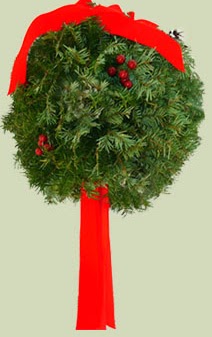
Ever heard of the old-timey “Kissing Ball”?  Crabapple LandscapExperts agree, holidays seem more charming when fresh botanicals are used for decorations, and there’s no excuse in our industry not to bring some evergreens indoors! Along with pine and mistletoe, it’s traditional to deck the halls with boughs of holly and boxwood, two evergreens that symbolize ‘constancy’ and ‘foresight’ in the Language of Flowers. While some “Kissing Balls” are made of needle-leaf evergreens, this winter try one made of boxwood and holly.  Easy to make and with staying power that lasts through New Years Day and beyond, a shoe box of 4-5 inch clippings will make one kissing ball and will create the finish to a beautiful holiday.

How to Make a Boxwood & Holly Kissing Ball

Supplies:
Half a block of floral foam, well soaked in water
Tight plastic mesh from bulb, grapefruit or onion bags, dark color preferred
Spool of thin wire approximately 18 to 20 gauge 
Clippers
About a shoebox full of 4-5 inch sprigs of Green Borders Boxwood
About a dozen 4-5 inch clippings of Christmas Jewel® Holly with berries
A few sprigs of mistletoe
Floral pick
Red Ribbon

Directions
  •        Soak the floral foam (one brand name is Oasis) thoroughly, then pare off the corners to make a rounded or ball shape about 5 inches across. 
  •        Drain the floral foam and wrap the plastic mesh around it, enclosing the foam securely. Weave or stitch it together in a few places to hold it closed. 
  •       Cut a 10-12 inch length of wire to make a hanger. Thread it through the center of the foam, creating a bend or U- shape to catch on the bottom side of the foam. Make a loop at the top for hanging. 
  •       Clip enough 4-5 inch sprigs of boxwood and stick in the floral foam to cover the ball evenly and completely, making a uniform sphere of boxwood about 10 inches in diameter.  
  •       Add berried stems of berried holly as an accent, again spacing evenly around the sphere. Your lush, full Kissing Ball of greenery is now ready for decorating. 
  •       Wire a bit of mistletoe to a pick and insert at the bottom of the sphere.  
  •       Add a red bow at the top and a tuft of short streamers to the bottom of the ball and hang it up! 

       
Throughout the Holidays, re-soak the entire Kissing Ball once in awhile to keep the green stems fresh, submerging it in a large basin of warm water then allowing it to drain well before re-hanging.

Your friends at Crabapple LandscapExperts hope you meet someone interesting beneath the Kissing Ball.

Wednesday, December 18, 2013

Peeling, Exfoliating, Ornamental Bark for Winter Landscape Interest


Paperbark Maple Bark

Tree leaves are down and most deciduous branches are bare. And though Crabapple LandscapExperts can enhance the winter landscape of the properties you manage with winter-flowering Camellia, Witch Hazel, Oregon Grape Mahonia, Japanese Paperbush, and Hellebore as well as cool-season winter color plants, there is another ornamental feature that takes center stage in the landscape now.

Peeling bark, known as exfoliating bark (as in skin care) is the natural process of old bark peeling away from a tree trunk in large curls or patches, revealing the new bark that is often of a different color beneath. Certain trees are known for this shedding of bark and used ornamentally in the landscape.  

Cork Oak Bark by P Tobin
Exfoliating bark adds visual interest and captures attention during the winter season. Some of the trees selected for this attractive feature include: 
  • Paperbark Maple (Acer griseum), 
  • 3-Flowered Maple (Acer triflorum
  • River Birch (Betula nigra
  • Lacebark Pine (Pinus bungeana)  
  • Lacebark Elm (Ulmus parvifolia) 
  • American Sycamore (Platanus occidentalis) large tree
  • Climbing Hydrangea (Hydrangea anomala ssp. Petiolaris) woody vine 

Crapemyrtle Bark by UAR
Besides beauty, exfoliating bark eliminates fungus diseases, boring insects and pollution from an ornamental tree by simply dropping off, all ecological advantages for the tree. Crabapple LandscapExperts often chooses these trees for the urban landscape, since they can refresh and renew their bark despite ozone and urban particulate matter. Call your Crabapple Rep now to discuss adding woody plants with attractive bark to your landscape during the winter planting season at 770-740-9739. 


Eucalyptus deglupta


Digging Deeper
Rainbow Eucalyptus (Eucalyptus degluptais a tropical tree with incredible exfoliating bark! --> 

Wednesday, December 11, 2013

Think Outside the Box to Choose a Living Christmas Tree

Choose a Living Christmas Tree; Think Outside the Box!

Blue Spruce likely will not thrive
in Hotlanta
Purchasing a freshly cut Christmas tree, wreaths and greenery each year is not a profligate waste of resources, but specifically helps Christmas Tree Growers and the Agricultural industry in general. Just think of cut trees as longer-term "cabbages" specifically planted by tree farmers to be harvested in seven years or so. After the holidays put discarded trees to good use as habitat for wildlife, or chipped, shredded and turned into compost, thus recycling their nutrients and minerals and enriching the earth. It’s all good.  

On the other hand, the popularity of choosing a live Christmas tree growing in soil in a nursery pot has been on the rise. The problem is that many of these trees don’t survive the holiday season or don’t fit the Atlanta climate or the landscape plan if they do survive. Crabapple LandscapEXPERTS suggest you choose a tree appropriate for the climate, care for it correctly while it is decorated, and afterward, use it to good advantage and site it correctly when planting in the landscape.  

When shopping for the tree, consider its mature height and width and plan ahead to decide where it will be planted in the landscape. Savvy gardeners and landscapers dig the hole before they ever go shopping for a tree.

Vigorous rootball
When selecting a prospective tree, choose only healthy stock and not stressed leftovers from last season. Consider good color, good branching structure and flexible limbs. Knock the plant out of the container and look for non-pot bound, non-circling root systems with fresh white feeder roots.  The potting mix should be moist, and there should be no disease or insect damage evident.

Choose only from varieties that grow well in the area. While fir, spruce and pine are traditionally used for cut trees, they are not suited to live in metro-Atlanta. Garden Centers often market a wide variety of cone-shaped trees as holiday options, whether or not they do well long-term, so choose the one that’s best for the area and the specific landscape, even though it may not be a traditional choice. 

Deciduous
Now is the time to be thinking “outside the box”. What about choosing a dogwood, redbud, flowering cherry, deciduous magnolia or double file viburnum to decorate? Ornaments would look terrific hanging from bare branches, and one of those might be just the accent plant the landscape needs. 

Cone Rosemary
What about a cone-shaped rosemary or bay tree? Even a balled & burlapped selection is ok; merely place in a large landscape pot with drain holes and cover with mulch to keep evenly moist. 

Tropicals can be decorated!
Don’t fail to include the Tropicals section when searching for a living Christmas tree. The Norfolk Island Pine is “nearly traditional,” and one year I didn’t even shop but decorated our oversize Monstera deliciosa with a choice selection of my Mom’s vintage ornaments. It’s the season!

If a hardy tree is selected, don’t bring it inside right away, but keep it outside in a protected area until a few days before Christmas. Keep the soil moist but not wet and sheltered from winds and full sun. Acclimate the tree to warmer temperatures by moving it onto a covered porch or garage over a period of three to four days.

For needle-leaf or broad-leaf evergreens, decrease transpiration from the leaf surfaces and retain valuable moisture within the tree by spraying with an anti-desiccant/anti-wilt product.  A couple of brand names are Wilt Pruf or Cloud Cover.

Crabapple Warning: a living tree that soon will be returned to winter temperatures outside cannot be brought indoors for weeks on end without consequences. Warm rooms with low humidity can quickly dry out the tree. Dormant buds can break and grow in a “false spring,” only to suffer when moved back outside. Avoid bringing the tree indoors too early, since the less time spent in hot, dry indoor temperatures the better, and certainly no more than a week. Avoid placing near heat vents, forced air, radiators, stoves, but do consider a window where it will get some sunlight. Keep soil in the pot moist.


After Christmas move the tree back outdoors to that protected area so it can readjust for a week or so. When there’s a break in the weather, follow recommended planting procedures, with a wide, shallow planting holeabout twice as wide as the root ball, but not deeper.  Plant slightly higher than the surrounding soil because it will soon settle, backfill with the native soil and mulch the tree to retain moisture. Newly planted trees need even moisture, so water throughout winter and spring. The new addition will contribute holiday memories as it adds beauty to the landscape.  

Wednesday, December 4, 2013

Nature Indicates Best Planting Time for Bulbs is NOW!


Colorful tulips make a big impact on the landscapes you manage when they flower in the spring. 

Crabapple can add brilliant tulips to your Seasonal Color Beds by planting Spring-flowering bulbs now. Crabapple LandscapEXPERTS Floriculture Manager Chessa Azzolesi says, “We do not install tulip bulbs at the same time we install the fall pansies and cool season annuals. The ground is not yet cold enough, and the days are not short enough then. We install our tulip bulbs in December, usually one to two weeks before the Holidays.”

Some of Nature's “Guidelines” that signal when to plant bulbs 
  • Night temperatures average 40-50 degrees F. 
  • Soil temperatures hit 50-60 degrees F.
  • The UGA / Georgia Tech game has been played
  • Persimmons are ripe on the trees
  • Chickweed begins to appear in the flower beds 
  • Camellia sasanquas are in bloom
  • Tender houseplants are back indoors
  • Cicadas and crickets stop chirping 
  • Gloves are needed when walking the dog 
  • Fall foliage is past its peak and heaps of autumn leaves are on the ground
  • There's a run on fruitcakes at the grocery
  • Christmas wrapping paper goes on sale
  • Christmas Cactus is in bud
  • Crabapple winterizes your irrigation system 
  • Migrating birds fill the skies 
  • Peony foliage is brown and Hosta leaves are on the ground 
  • Car heater is often turned on 
  • Chipmunks and squirrels are actively burying pecans and acorns

Time is short! Call your Crabapple Rep this week at 770-940-9739 to get some Tulip bulbs added to your corporate landscape. 

Digging Deeper


To hear a quick Radio Spot on City CafĂ©’ with John Lemley on planting fall bulbs with Geri Laufer, click the link:  http://wabe.org/post/city-cafe-fall-ones-fancy-turns-todaffodils-and-tulips-0